Tuesday, 4 June 2013

Heart Dissection


Compare the structure of the atria and ventricles - how are they different?  Why is that?
Atria: thin muscular walls, blood enters them through a blood vessel and leaves through a valve
Ventricles: thick muscular walls, blood enters them through a valve and leaves through a blood vessel
Atria are smaller than ventricles, and have less cardiac muscle. While the ventricles are used to pump blood to other regions of the body, the atria's only purpose are to pump blood into the ventricles themselves, and fill them up with blood. Also, the atria have valves in them them to prevent blood from coming back into them from the ventricles.


Did you notice a difference between the veins and arteries entering and leaving the heart?  How is their structure different?
Veins: thin muscular wall and little elastic tissue 
Arteries: thick muscular wall and have lots of elastic tissue
1) Arteries carry blood away from the heart while veins carry blood to the heart.
2) Arteries have thick and muscular walls (as they have to endure higher pressure) whereas veins have thin and slightly muscular walls.
3) Arteries have no valves, while veins have valves.
4) Arteries (in the post-fetal human) carry oxygenated blood except for the pulmonary arteries. Veins (in the post-fetal human) carry de-oxygenated blood except for the pulmonary veins.


Describe the valves that you found in the heart - what are their functions?
AV Valves (Tricuspid & Mitral)
-Tricuspid is located between the right atrium and right ventricle, closes when the right ventricle contracts therefore the blood from the ventricles are able to go out of the heart  
-Mitral is located between the left atrium & left ventricle, closes when left ventricle contracts, preventing back flow of blood into left atrium
Semi-lunar Valve:
Allows blood to flow from atria to ventricles, & prevent back flow of blood when the ventricles contract

What surprised you about dissecting the heart?  Why?
Unfortunately I was too sick to my stomach to actually participate in the dissection of the heart and decided to be a disturbed bystander. However, as I watched the dissection take place I was could not help but stare in awe and shock. It was hard to believe that such a little thing was so complicated and played such a great role in the functioning of our bodies. What surprised me the most was that I was actually able to recognize parts of the heart that we had learnt about in class. This dissection was a great experience and made me realize how complicated the structure of a heart actually is.  


Monday, 3 June 2013

Engaging In Class

Every individual has their own way of engaging in class and its always different. Not every student has the courage and confidence to be able to raise their hand in class and ask a question in front of their classmates and teachers have been understanding enough to find ways around this. For example our blogs have given each of us the ability to share our knowledge and engage in class. Another great method that was presented in our class that encouraged engagement was the question box. This question box gave every student the opportunity to ask the teacher questions anonymously. Another way to show that you are engaged in class is taking detailed notes and this is the method I use most often. I am one of the students that tend not to regularly raise my hand but still I pay close attention. I take detailed notes during all lessons and highlight all important points and underline the others. Detailed notes not only prove engagement they also help the student out while studying and make review much easier. 

Tuesday, 14 May 2013

Questions About The Kidney

1) How big is a kidney?
Each Kidney is about 4 1/2 inches long and weighs approximately 4 to 6 ounces

2) What is the size of the kidney within a baby?
The kidneys of a newborn baby are about 3 times larger in proportion to body weight as in an adult.

3) Does the blood flow that occurs within the kidney differ from the brain and heart?
The kidneys have a higher blood flow when compared to the brain, liver, and heart.

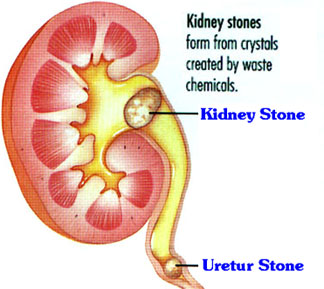
4) What is kidney stones?
Kidney stones are an accumulation of mineral salts and mostly combined with calcium which can lodge anywhere along the course of the urinary tract.

5) What can cause kidney stones?
An excess of milk or antacids may cause kidney stones.

6) What helps make kidney stones?
Refined carbohydrates and sugar help the body make kidney stones.


http://www.webmd.com/urinary-incontinence-oab/picture-of-the-kidneys

Nephron and the urinary system: monica and ashpreet

http://m.youtube.com/#/watch?feature=youtube_gdata_player&v=xV647IQfusM&desktop_uri=%2Fwatch%3Fv%3DxV647IQfusM%26feature%3Dyoutube_gdata_player

Thursday, 9 May 2013

Circulation Quiz Review


Pulmonary System:
-Deoxygenated blood
-Blood is carried away from the heart to the lungs
-Begins at the right ventricle
-Walls are thinner
Systematic System:
-Oxygenated
-Carries blood away from the heart to the body
-Begins at the left ventricle
-Walls are thicker
Similarties:
-Carry blood to the tissues of whole body
-Both necessary to homeostasis

Arteries:
-Have a thicker wall because they have a larger middle layer
-Have arteriole
Veins:
-Larger in diameter
-Have venule and valves
-Thinner wall
-Walls have less smooth muscle and and connective tissue
Similarities:
-Walls have three layers
-Inner layer composed largely of endothelium
-With basement membrane that has elastic fibres
-Middle layer is smooth tissue
-Outer layer is connective tissue

Fetal Circulation:
Foramenovale
- helps RA and LA
-acts as lungs and digestive system for fetus
Ductus Arteriosis
-between pulmonary truck and aorta
-makes sure blood doesn't go into fetus lungs
Ductus Venosus:
-umbilical vein attaches to the vena cava

Friday, 26 April 2013

Interesting Question About The Heart

1) What is the "thump thump" sound the heart makes caused by?
The "thump thump" of the heart beat is the sound made by the four valves of the heart closing.

2) When does the heart actually start beating?
The heart begins to beat at four weeks after conception and continue to beats till one's death.

3) Does the rate the heart beats differ according to gender?
A woman's heart typically beats faster then a mans. The heart of an average man beats approximately 70 times a minute, whereas a woman's heart beats 78 times a minute.


http://my.clevelandclinic.org/heart/heart-blood-vessels/how-does-heart-beat.aspx


The Human Heart by Monica and Ashpreet

http://m.youtube.com/#/watch?v=YqOe9fnHLMw&desktop_uri=%2Fwatch%3Fv%3DYqOe9fnHLMw

Monday, 15 April 2013

Lab Exploring pH

Intro:
What is an acid?
Releases H+ ions HCL H2 CO3
What is a base?
Releases OH- ions (or take up H+ ions)
What is a buffer?
A compound that maintains pH by accepting or releasing H+ ions

Exploration Materials:
- HCL
- NaOH
- Unknown A,B,C,D
- Distilled Water
- Litmus Paper
- pH Paper
- Buffer pH 7
- Spot Plate
- Test Tubes

Questions:
1) What do you want to know?
I would like to know if acids and bases react to one another?
2) How can you figure that out?
Mix to representatives of each together and observe the reaction.
It was discovered that acids mixed with bases neutralize each other.

Observation:


Exploration:
Classify, explain how the buffer worked?
Baking soda + vinegar, borax?
A buffer helps prevent the pH of a solution from changing drastically. The weak acid/base and its conjugate acid/base absorb the excess H+ and OH- by creating water and another compound in another in order to minimize changes to the pH order.

Conclusion:
Two questions that have arisen from your experiments; don't need an answer?
1) How does a pH scale work?
2) What do different pH levels of particles actually represent?


Saturday, 13 April 2013

Respiration


Inspiration: 

In order for inspiration to occur the intercostal muscles and the diaphragm contract. First the intercostal muscles contract causing the ribs to elevate and increase the dimension of thoracic cavity. Then the air pressure in the lungs become lower and the air moves into the lungs. In order for the diaphragm to contract the diaphragm moves down.  
Expiration:
The process of expiration occurs when intercostal muscles and the diaphragm relax causing the ribs to relax. Then the volume of the thoracic cavity and the pressure in the lungs decreases while air is exhaled. 

What causes the lung to inflate with air?

This process is inflation which is caused when ones chest moves up due to the contraction of the thoracic cavity. Ones lungs inflate with oxygen when you breathe which causes them to expand and your chest expands as well.

Why do they deflate?

 This process is called deflation and is caused when your diaphragm and intercostal muscles relax.

What part of the process requires a "muscle contraction' of the diaphragm?
Inhalation 


Wednesday, 3 April 2013

Vital Capacity

1) My vital capacity turned out to be 2.4 on my second try; on my first attempt it was 1.8 however that many have happened because I was kind of confused as to what to do. While comparing my vital capacity to the people close to me I noticed that people that were taller tended to have a higher vital capacity. For example Monica who is much taller then me had a vital capacity of 3.2 while Brianna who is very close to my height had a vital capacity of 2.4, which is the same as mine. I also realized that the boys had a much higher vital capacity all together when compared to the girls. Therefore I think that a human's vital capacity depends on age, sex, height, and weight. The highest and lowest vital capacities are they way they are because it varies person to person and depends on how much air they can exhale in one breath. 

2) In an average usual breath there is 500 ml or half a litre of air. Our breaths are the volume that they are because of how healthy our lungs are and because our lungs tend to adapt to to how much air we need on a daily basis.

3) The mechanisms of forcefully exhaling is different from usual exhalation because it uses more muscle while blowing the air of our bodies. During forced exhalation, as when blowing out a candle, expiratory muscles including the abdominal muscles and internal intercostal muscles generate abdominal and thoracic pressure, which forces air out of the lungs. Practice at this via exercise/instrument playing/singing because you can manage and control your breathing more.


Wednesday, 6 March 2013

Interim Report

1) An experience I felt successful about in Bio 12 is when I was able to label all parts of the digestive system without any reference or difficulty. I realized I as capable of doing this after we made the digestive system t-shirts in class.

2) When I look through my binder I see that all my worksheets and other assignments have been completed. I have also handed in or blogged about every thing we have been assigned.

3) Yes, I have had the chance to work with other students in the class room. I received this opportunity when we completed the lab and when we were assigned the group project in order to present our knowledge about the digestive system.

4) Biology or any science in particular has never been a strong area for me. I've always had difficulty with Biology because I never seemed to find it interesting but that has changed this year. Ms.Phillips manages to teach us all the information in a more exciting way. I have never been bored in this class. My goal for this class is to actually leave with a different perspective in regards Biology; I would like to learn information and not forget it as soon as I walk through the door this time. I good grade would also be plus point. In order to achieve an A I realize that I must pay attention during class and if I ever have any difficulty understanding something I should ask questions or stay after class and ask the teacher.

Wednesday, 20 February 2013

Biological Molecules & Food Lab

1) The positive and negative results were different for all three tests that took place last class. A lipid test would be positive if there was a stain left on the paper from when you rubbed the food item against it. A starch test would be positive if the food item turned black once it came in contact with the chemical. A glucose test would be positive if the items in the test tube changed to orange or yellowish colour after being heated for about two minutes.

2)
 
Glucose is the building block that starch molecules are made up of.

3) I think that all the test tubes indicated a positive result at the end of the additional two minutes because the carbohydrate molecules received the additional time they required to break down and release the simple sugars known as glucose. 

4) The Journey Of A Cupcake From The Start To The End:
The four stages of digestion are ingestion, digestion, absorption, and elimination. Ingestion is the process of putting the food or drink into your mouth and digestion begins as soon as you start chewing the cupcake. Mechanical digestion is when you use your teeth and tongue to chew your food until it id small enough to swallow. The little ball of food that you swallow is called a bolus which is covered with saliva in order to make the journey easier. Chemical digestion occurs because of an enzyme found in your saliva which helps speed up a chemical reaction. This enzyme is called amylase and it breaks down the bolus by breaking down the complex carbohydrates into simple carbohydrates or sugars. Once the cupcake is swallowed it passes through the pharynx which is where the airway passage and digestive system meet. The airway tube is covered by a flap of flesh called the epiglottis. This flap covers the airway for when you swallow. The cupcake then makes it way to the esophagus which connects the pharynx to the stomach. Food is then propelled through by a process called peristalsis which is caused by the contractions of muscles. Once in the stomach gastric juices called HCL, mucus, and pepsin break down the bolus into a liquid called chyme. There are two muscles at each end of the stomach called sphincters; these are round muscles that open to let things through. Once the chyme makes it through the sphincter it enters the small intestine and the second stage of digestion is complete once food leaves the duodenum, the first meter of the small intestine. Once through the duodenum digestion is complete and nutrients can be absorbed in the small intestine. The small intestine is covered in little folds called villi which provides more surface area and increases the rate of absorption. It takes about five to six hours to move from the small intestine into the large intestine. The large intestine takes undigested materials from the small intestine and reabsorbs water and minerals. The process of peristalsis occurs here once again and this time it takes about twelve to twenty-four hours. Any undigested materials leaving the large intestine are now considered as feces. This waste is stored in the rectum until it can be eliminated through the anus.