Tuesday, 4 June 2013

Heart Dissection


Compare the structure of the atria and ventricles - how are they different?  Why is that?
Atria: thin muscular walls, blood enters them through a blood vessel and leaves through a valve
Ventricles: thick muscular walls, blood enters them through a valve and leaves through a blood vessel
Atria are smaller than ventricles, and have less cardiac muscle. While the ventricles are used to pump blood to other regions of the body, the atria's only purpose are to pump blood into the ventricles themselves, and fill them up with blood. Also, the atria have valves in them them to prevent blood from coming back into them from the ventricles.


Did you notice a difference between the veins and arteries entering and leaving the heart?  How is their structure different?
Veins: thin muscular wall and little elastic tissue 
Arteries: thick muscular wall and have lots of elastic tissue
1) Arteries carry blood away from the heart while veins carry blood to the heart.
2) Arteries have thick and muscular walls (as they have to endure higher pressure) whereas veins have thin and slightly muscular walls.
3) Arteries have no valves, while veins have valves.
4) Arteries (in the post-fetal human) carry oxygenated blood except for the pulmonary arteries. Veins (in the post-fetal human) carry de-oxygenated blood except for the pulmonary veins.


Describe the valves that you found in the heart - what are their functions?
AV Valves (Tricuspid & Mitral)
-Tricuspid is located between the right atrium and right ventricle, closes when the right ventricle contracts therefore the blood from the ventricles are able to go out of the heart  
-Mitral is located between the left atrium & left ventricle, closes when left ventricle contracts, preventing back flow of blood into left atrium
Semi-lunar Valve:
Allows blood to flow from atria to ventricles, & prevent back flow of blood when the ventricles contract

What surprised you about dissecting the heart?  Why?
Unfortunately I was too sick to my stomach to actually participate in the dissection of the heart and decided to be a disturbed bystander. However, as I watched the dissection take place I was could not help but stare in awe and shock. It was hard to believe that such a little thing was so complicated and played such a great role in the functioning of our bodies. What surprised me the most was that I was actually able to recognize parts of the heart that we had learnt about in class. This dissection was a great experience and made me realize how complicated the structure of a heart actually is.  


Monday, 3 June 2013

Engaging In Class

Every individual has their own way of engaging in class and its always different. Not every student has the courage and confidence to be able to raise their hand in class and ask a question in front of their classmates and teachers have been understanding enough to find ways around this. For example our blogs have given each of us the ability to share our knowledge and engage in class. Another great method that was presented in our class that encouraged engagement was the question box. This question box gave every student the opportunity to ask the teacher questions anonymously. Another way to show that you are engaged in class is taking detailed notes and this is the method I use most often. I am one of the students that tend not to regularly raise my hand but still I pay close attention. I take detailed notes during all lessons and highlight all important points and underline the others. Detailed notes not only prove engagement they also help the student out while studying and make review much easier. 

Tuesday, 14 May 2013

Questions About The Kidney

1) How big is a kidney?
Each Kidney is about 4 1/2 inches long and weighs approximately 4 to 6 ounces

2) What is the size of the kidney within a baby?
The kidneys of a newborn baby are about 3 times larger in proportion to body weight as in an adult.

3) Does the blood flow that occurs within the kidney differ from the brain and heart?
The kidneys have a higher blood flow when compared to the brain, liver, and heart.

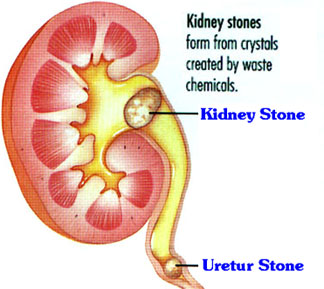
4) What is kidney stones?
Kidney stones are an accumulation of mineral salts and mostly combined with calcium which can lodge anywhere along the course of the urinary tract.

5) What can cause kidney stones?
An excess of milk or antacids may cause kidney stones.

6) What helps make kidney stones?
Refined carbohydrates and sugar help the body make kidney stones.


http://www.webmd.com/urinary-incontinence-oab/picture-of-the-kidneys

Nephron and the urinary system: monica and ashpreet

http://m.youtube.com/#/watch?feature=youtube_gdata_player&v=xV647IQfusM&desktop_uri=%2Fwatch%3Fv%3DxV647IQfusM%26feature%3Dyoutube_gdata_player

Thursday, 9 May 2013

Circulation Quiz Review


Pulmonary System:
-Deoxygenated blood
-Blood is carried away from the heart to the lungs
-Begins at the right ventricle
-Walls are thinner
Systematic System:
-Oxygenated
-Carries blood away from the heart to the body
-Begins at the left ventricle
-Walls are thicker
Similarties:
-Carry blood to the tissues of whole body
-Both necessary to homeostasis

Arteries:
-Have a thicker wall because they have a larger middle layer
-Have arteriole
Veins:
-Larger in diameter
-Have venule and valves
-Thinner wall
-Walls have less smooth muscle and and connective tissue
Similarities:
-Walls have three layers
-Inner layer composed largely of endothelium
-With basement membrane that has elastic fibres
-Middle layer is smooth tissue
-Outer layer is connective tissue

Fetal Circulation:
Foramenovale
- helps RA and LA
-acts as lungs and digestive system for fetus
Ductus Arteriosis
-between pulmonary truck and aorta
-makes sure blood doesn't go into fetus lungs
Ductus Venosus:
-umbilical vein attaches to the vena cava

Friday, 26 April 2013

Interesting Question About The Heart

1) What is the "thump thump" sound the heart makes caused by?
The "thump thump" of the heart beat is the sound made by the four valves of the heart closing.

2) When does the heart actually start beating?
The heart begins to beat at four weeks after conception and continue to beats till one's death.

3) Does the rate the heart beats differ according to gender?
A woman's heart typically beats faster then a mans. The heart of an average man beats approximately 70 times a minute, whereas a woman's heart beats 78 times a minute.


http://my.clevelandclinic.org/heart/heart-blood-vessels/how-does-heart-beat.aspx


The Human Heart by Monica and Ashpreet

http://m.youtube.com/#/watch?v=YqOe9fnHLMw&desktop_uri=%2Fwatch%3Fv%3DYqOe9fnHLMw